

The capital of seven+ hills
Yaoundé: Things to Do, Day Trips & Travel Tips
Yaoundé, Cameroon’s capital, has long since grown beyond its seven hills and lies in the middle of the rainforest belt of the Centre region. For most travellers it is the first stop, and many expats live here. With the National Museum, the Muslim quarter of Briqueterie, the viewpoint on Mont Fébé and a nightlife that people in Douala like to underestimate, the city has a lot to offer. There are also great day trips from Yaoundé: to orphaned gorillas in the Parc de la Méfou, by pirogue to giant trees in Ebogo, or for a weekend in the resort village of Nkolandom or at the Oveng Lodge.
 I’m André, and from 2022 to 2026 I lived in Yaoundé as part of a Cameroonian family. Here you’ll find my personal tips for the city and the best day trips in the area. More information, contacts and addresses are in our Cameroon travel guide (only in German for now).
Jump to:


Yaoundé at a Glance: Location, Safety, Best Time to Visit, Budget
Location & Getting There

 YaoundéMéfouEbogoNkolandom
Hover for the detailed mapTap for the detailed map
- RegionCentre, in the rainforest belt
- Population Yaoundé approx. 3.7 million (estimate)
- AirportYaoundé-Nsimalen, about 25 km south of the city
- From Douala4 to 5 hrs by bus or train
Safety
Yaoundé is easy to travel if you follow a few rules.
Keep a low profile and don’t go for walks at night. Avoid visiting busy markets and places alone (Mokolo Market, Avenue Kennedy). Be friendly and smile, but stay alert at all times. Use the taxi app Yango or a private driver rather than shared taxis and motorbike taxis. Protect yourself against malaria with prophylaxis, long clothing and mosquito nets.
More on safety in my dedicated safety article.
Best Time to Visit
Can be visited all year round
Long dry season from Dec to March: dry and hot.
Short rainy season from April to May, often with short, heavy rain.
Short dry season from June to August: little rain and pleasant, mild temperatures.
Long rainy season from September to November: heavy, sometimes persistent rain.
The short dry season is the most pleasant time in Yaoundé, but you can travel there all year round.
Length of Stay
2 to 3 days
Including day trips to Ebogo or the Parc de la Méfou. Nkolandom and the Oveng Lodge are best for a separate weekend.
Budget
Hotels from about €50 per night
Decent standard from about €50 per night. Very good hotels in Bastos with a pool from about €100.
Street food often costs less than €3 per meal. In international or upscale local restaurants you pay more than €15 per meal.
More in the Travel Guide
Phone numbers of taxi drivers, places to stay I recommend, and contacts for the Parc de la Méfou, Ebogo and the Oveng Lodge are all in our travel guide.
Highlights in Yaoundé: Neighbourhoods, Culture and Nightlife
Yaoundé is a good starting point for any trip to Cameroon and home to many expats. These neighbourhoods and places show you the city the way I experienced it from 2022 to 2026.


- Stay: 1 to 2 days
- Where to stay: In Bastos or the city centre
- Getting around: Taxi or Yango, never alone at night
- Watch out: Keep a low profile at markets and on busy streets
Lived in Yaoundé from 2022 to 2026
In the Cameroon travel guide: reliable taxi drivers with phone numbers, places to stay in Bastos and the city centre, plus restaurants, bars and cultural activities I recommend.
1 Yaoundé, Big City and Village at Once
Yaoundé is Cameroon’s capital and political centre. The president lives here, and it is home to ministries, embassies and international organisations. The ministry buildings in the style of African Modernism or Brutalism give Yaoundé a big-city look, yet just around the next corner chickens cackle on bumpy red dirt roads. Yaoundé is a big city that has stayed a village at heart.
Yaoundé is a good starting point for your trip to Cameroon. Not only because the city is calmer than Douala, the climate at around 700 metres above sea level is milder and it is centrally located. The dense rainforests and the cultural scene also make it a destination worth seeing.
Two to three days are enough for a first visit: one day in the city centre and the Briqueterie, with a Kadji beer in one of the countless bars in the evening, and one day trip to Ebogo and/or the Parc de la Méfou. If you have more time, you can dive much deeper into the cultural and natural highlights of this city.
- Day 1: Morning workout on Mont Fébé or a morning church service, city centre with the National Museum, a walk through the Briqueterie, then a bar or club in the evening.
- Day 2: Pirogue trip in Ebogo, orphaned gorillas at the Parc de la Méfou on the way back

Bastos
The diplomatic quarter with embassies, villas, hotels and lots of Western restaurants and bars. This is where most expats live (including me for a long time) and where most tourists stay. Worth seeing are the Palais des Congrès, where the big Yafé fair takes place in December, and the Orthodox cathedral.

Mont Fébé and Sport
Mont Fébé offers a wide panorama over the city. Especially at weekends, countless people meet here in the morning to run or do dance workouts. Highly recommended! As an alternative to the climb there is the Parcours Vita, a loop trail that takes you into a mini rainforest. On Sundays at 2:30 pm a guided hiking group sets off into the hills from in front of the Hilton. Football fans can visit the new Olembe Stadium or the historic Omnisport stadium.

City Centre
Around the Poste Centrale lies the bustling city centre. Traders spread their goods out on the pavements and taxis honk their way through the traffic. Better avoid Avenue Kennedy at any time of day (pickpockets). The Place de l’Indépendance recalls the early years of the republic (brutalist architecture framed by glass buildings). One of the best-known landmarks is the Reunification Monument: wide views over the city, but unfortunately hardly any information boards.

Briqueterie
The “Brique” is Yaoundé’s Muslim quarter, lively and full of colour. A visit is especially worthwhile on quieter Sundays. Here you can visit the large Central Mosque and the small but oldest blue mosque in the city. Unfortunately, women are not allowed inside. The streets are lined with fabric shops, and the tailors will sew you a new outfit before you fly home. Be sure to try the North Cameroonian specialities: soya (meat skewers), kilichi (dried meat), kossam yoghurt and chai (tea).

Museums and Culture
Your first stop should be the National Museum in a former presidential palace. Also worth a visit are the Musée Ethnographique des Peuples de la Forêt and the Blackitude Museum, ideally with one of the local guides working at the museums. Going to Sunday mass in one of the many churches (Notre Dame, Marie-Reine-des-Apôtres) lets you experience Cameroon up close. You’ll find local crafts at the Centre de l’Artisanat. The Institut Français and the Goethe-Institut host cinema, theatre and concerts almost every day, Ubuntu and Laboratoire de Music Bastos often host music events, and in October the Écrans Noirs film festival takes place.

Markets and Food
With the Mokolo Market Yaoundé has the largest market in Central Africa, and it is very busy. Better go with someone who knows it and keep an eye on your valuables! The Marché Central also has everything you need in Cameroon. For a first visit, the Nkol-Eton food market is calmer. Try local dishes such as okok, sanga, mets de pistache or ndolé, which comes from the Littoral region. Street food like omelette spaghetti or beignets haricots is also a cult classic. In the evening my favourite is the Karoka bar with its CAM burger (plantain instead of a bun) and karaoke at weekends.

Going Out and Nightlife
Yaoundé is full of places to go out. There is live music at Boukarou, salsa on the Rooftop or at JC Prestige, and billiards and an authentic atmosphere at Bleco. The club districts are Essos and Biyem-Assi; a popular club is K-Dreams. The “Champagne du Pays” is Kadji, a Cameroonian beer. Matango, the palm wine, is drunk mostly at family celebrations.

My First Time Cooking Cameroonian Food
Excursus · From the blog
The best way to get to know Yaoundé’s food is in a Cameroonian kitchen. I tried cooking okok myself for the first time: a stew of finely cut leaves, peanuts and palm oil, eaten with cassava sticks.
My first time cooking okok (German) →
More from my travel blog →

Morning Sport in Yaoundé
Excursus · From the blog
At weekends, countless people in Yaoundé start the day with sport: running up Mont Fébé, group dance workouts and more. I joined in and wrote about running, dancing and sweating on Mont Fébé.
Morning sport on Mont Fébé (German) →
More from my travel blog →
Day Trips from Yaoundé
The best excursions are south of the city. I have visited all five places myself, some of them several times, from day trips to weekends. You’ll find the monkey island of Marienberg near Edéa on my Kribi & Coast page.


2Parc de la Méfou
If you don’t have time to explore the rainforest but really want to see gorillas and other primates, head to the Parc de la Méfou. Orphaned primates live here in conditions suited to their species. Next to the park there is even a rescue station for pangolins, although it is closed to visitors. As of November 2026 the centre is being renovated and is temporarily closed.
- Stay: 1 day
- Getting there: 1.5 hrs south of Yaoundé (by car)
- Tip: Call ahead to announce your visit


3Ebogo on the Nyong River
Ebogo is probably the most popular day trip for visitors to Yaoundé. By pirogue you paddle along the Nyong River through the rainforest to an ancient giant tree 12 metres in diameter, visit small fishing villages and learn a lot about the vegetation. At the lodge you can eat well, look out over the river and even stay overnight (in somewhat run-down but okay cabins).
- Stay: Half a day or overnight
- Location: 2 hrs south of Yaoundé (by car)
- Tip: Stay overnight to see the river in the morning light
Travel story: My taxi driver’s lucky number (Ebogo, German) →


4Nkolandom
A minister turned his home village into a relaxed resort, with a museum, lakes, sports facilities and excursions to caves. Best suited to expats looking for a restful weekend. If you’re only in Cameroon for a short time, it’s not a must-see.
- Stay: 2 to 3 days
- Getting there: Approx. 3 hrs from Yaoundé
- Location: South region, near Ebolowa


5Brick Cathedrals of Mbalmayo and Ebolowa
Both are interesting towns, but I wouldn’t call Mbalmayo and Ebolowa must-see destinations. If you’re passing through, it’s worth stopping to see their impressive red brick cathedrals.
- Stay: 1 hour as a stopover
- Location: Mbalmayo (1 hr south of Yaoundé), Ebolowa (3 hrs south of Yaoundé)
- Tip: Combine with Ebogo and Nkolandom


6Oveng Lodge
The Oveng Lodge was built entirely from renewable materials and is run the same way. Besides relaxing, you can go on guided forest walks and learn in cocoa workshops how beans become chocolate. Note: not for people who don’t enjoy being out in nature.
- Stay: 1 to 2 nights
- Location: 2 hrs south of Yaoundé
- Tip: Ideal for a weekend
← Swipe for more →
Yaoundé: FAQ
Is Yaoundé dangerous for tourists?
No, Yaoundé isn’t particularly dangerous for tourists as long as you follow a few rules for your safety. These include: keep a low profile, no walks at night, visit large markets and squares with someone you know, and get around with the taxi app Yango or a trusted driver rather than always taking shared taxis. Protect yourself against malaria with prophylaxis, long clothing and a mosquito net.
How do I get from Nsimalen Airport into the city?
Most international flights land in the evening or at night, so plan your transfer into the city in advance. Your hotel can arrange a driver, and our travel guide has a list of good drivers in Yaoundé. Expect to pay between 10,000 and 15,000 FCFA. The drive takes 30 minutes without traffic and up to 2 hours at rush hour. There are no buses.
Are there flights from Europe to Yaoundé?
Yes. Besides Douala, Yaoundé has Cameroon’s only other international airport, Nsimalen. Flights from Europe are operated by Air France, Brussels Airlines, Turkish Airlines, Royal Air Maroc and Ethiopian Airlines. You usually change planes at the airline’s hub, so the journey takes between 7 and 21 hours.
Which neighbourhood should I stay in?
Most tourists stay in the embassy district of Bastos or in the city centre. That’s where most of the hotels are, and the main sights are close by. In theory there’s nothing against staying in other neighbourhoods, but safety depends heavily on the area and the hotel. As a rule, make sure the hotel employs guards who control the entrance.
Is Yaoundé worth it, or should I move straight on?
A stay of 2-3 days in Yaoundé is absolutely worth it. You get a good first impression of the country and can visit church services, markets and bars in a fairly relaxed way. Because the city lies in the middle of the rainforest belt, it offers some attractive day trips. Especially if you haven’t planned much tropical forest otherwise, a trip to Ebogo and Méfou lets you dive into the rainforest and see gorillas.
What is life like in Yaoundé?
Many foreigners and expats live in Yaoundé, most of them comfortably in large flats or houses in Bastos. The climate is pleasant and there is plenty to discover (see above). After a while, though, you’ll notice that public cultural life (cinemas, museums, etc.) is somewhat limited. If you don’t like spending time in the city’s other neighbourhoods and discovering new things there, you’ll usually stay stuck in the monotonous expat bubble of Bastos. Thanks to the proximity of the presidential palace the security situation is calm, but you have to accept that other safety rules apply compared to Europe’s big cities (see above).
How do I get around Yaoundé?
The main means of transport in Yaoundé are the yellow shared taxis and motorbikes. For your safety, though, I’d recommend hiring a reliable private driver or using the taxi app Yango (a ride usually costs €1–5). There are no city buses or trams.
Can I take the train from Yaoundé?
Yes, trains leave Yaoundé every day for Douala (in the afternoon) and Ngaoundéré (in the evening). A train journey through Cameroon, for example up to the highland savanna of the Adamaoua, is a great way to experience the country. Tickets are sold by the railway company CAMRAIL, either online with Mobile Money or at the counter. It’s often best to book in advance.
What should I definitely eat in Yaoundé?
Try local dishes such as okok (a stew of spinach-like leaves, peanuts and palm oil, eaten with cassava sticks), sanga (a stew of maize and green leaves, often eaten sweet), mets de pistache (a paste of ground pumpkin seeds with meat or fish, cooked in banana leaves) or ndolé from the Littoral region (ndolé leaves cooked in peanut sauce and served with meat, fish or prawns, often also vegetarian, “sans obstacles”). These dishes are usually eaten with cassava sticks or plantains. Street food such as omelette spaghetti, avocado salads or beignets haricots is also a cult classic.

New · AVAILABLE NOW · German Only (English Version coming Soon)
Our Cameroon Travel Guide (PDF, 133 pages)
- For Yaoundé: two reliable taxi drivers, places to stay, restaurants and contacts for day trips
- 133 pages of planning, travel, route and culture tips
- Up-to-date information as of October 2026
- More than 100 contacts and 450 waypoints
- Written from five years of everyday life and travel in Cameroon
- Instant PDF download
19,90 €

Who’s writing here?
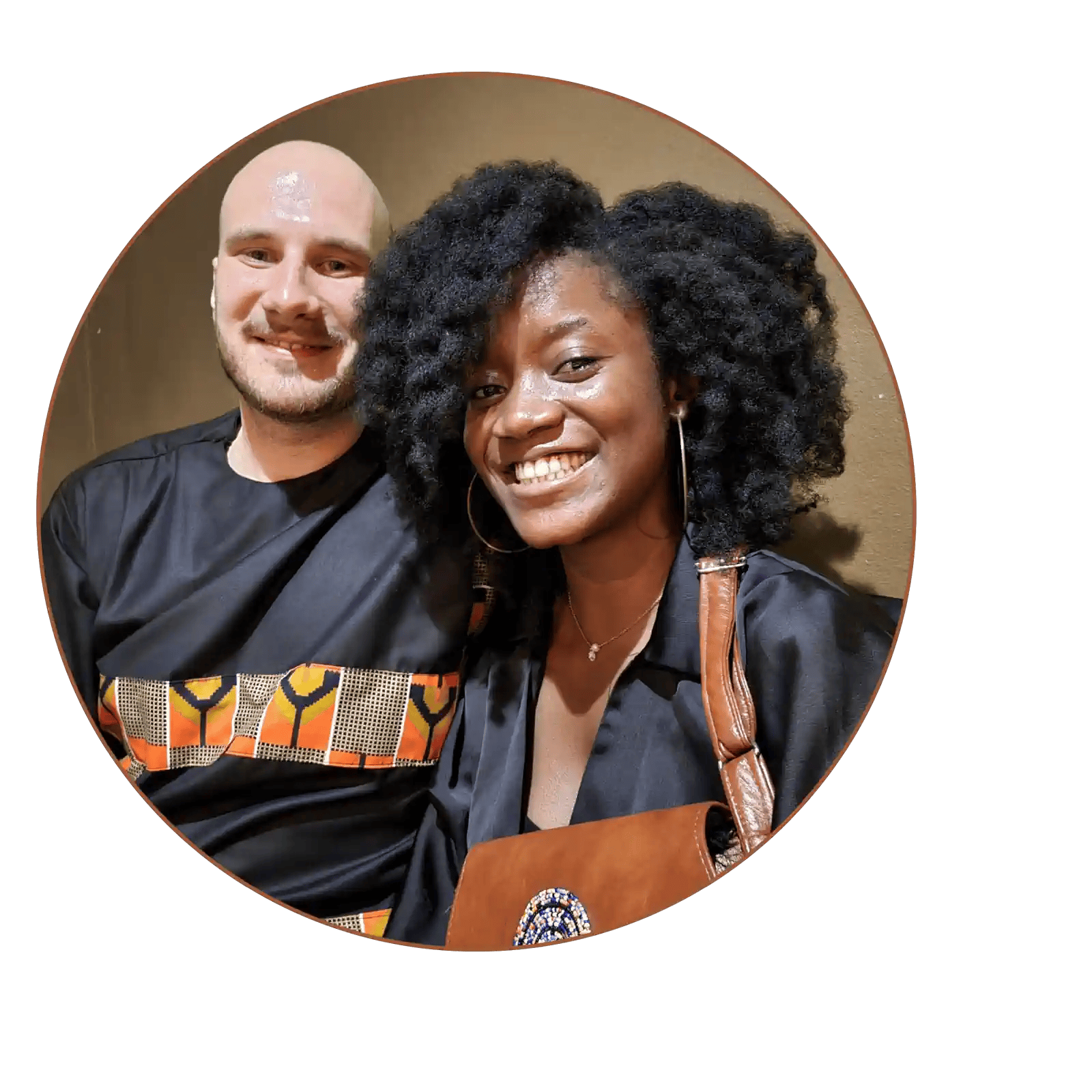
I’m André, your go-to person for travel in Cameroon. I lived in Yaoundé from 2022 to 2026 and am part of a Cameroonian family. On Wohinnoch? I write about my travels and share tips for Cameroon and other destinations. If these shouldn’t be my last words to you, subscribe to my blog and follow me.
New travel stories, tips and updates by email (max. once a week)